Category Archives: Family Fun Holidays

Home / Archive by category "Family Fun Holidays" ()

Khajjiar Sightseeing

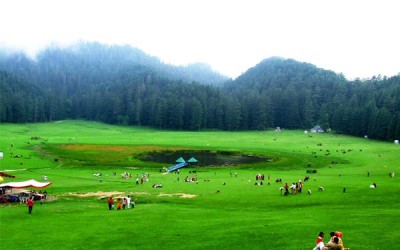
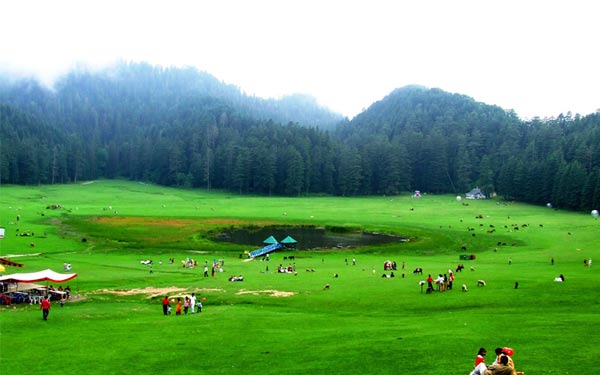
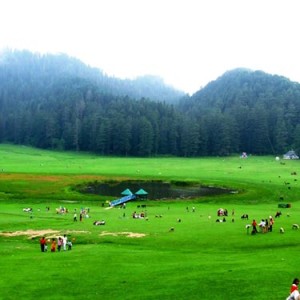
Khajjiar – Khajjiar is a popular hill station about 26 km from Dalhousie in Himachal Pradesh. Vast expanse of green meadows and dense forests besides vistas of majestic snow-clad Himalayan peaks make Khajjiar a popular destination among tourists. The Khajjiar Lake and Chamera Lake add to the charm of Khajjiar. Khajjiar is also called the Gulmarg of Himachal Pradesh and serves as the starting point for treks to Chamba, Dalhousie and Kalatop Wildlife Sanctuary among others. Indeed, trekking is the best way to explore Khajjiar. Zorbing, which involves rolling downhill from inside a plastic ‘zorb’, is a popular recreational activity during April and May.
Khajjiar lake #The Khajjiar Lake And Ground
The Khajjiar Lake and Ground can be reached via the Bakrota Hills from Dalhousie. On the way to the Kalatop Khajjiar Sanctuary, one can see the Lakkad Mandi and further down, the Khajjiar ground with the lake located centrally in it. This spot is ideal for photography and has also featured in lots of movies. The lake is considered holy due to its long association with the idol of the Khajji Nag Temple. This perennial lake is fed by a number of tiny water streams. On the lake, some clusters of grasses and weeds have grown that appear like a floating island, and is the major attraction. The spot around the lake, situated at an elevation of 1950 m above sea level, is a popular picnicking area.
#Panch Pandav Tree
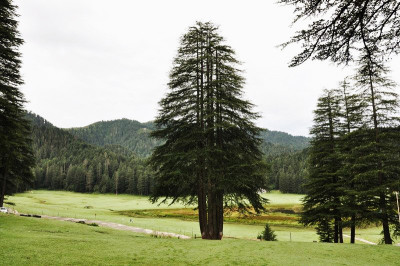
The Panch Pandav Tree is situated in the ground of Khajjiar. The tree is famous for its shoots. Although the main root of the tree and the shoots are same, there are six shoots branching out from the tree.According to the local inhabitants, the five shoots of this tree stand for the Five Pandavas and the last one symbolises Draupadi. This tree is close to a rest house that leads the way to Khajjiar School and a small village.In the forest of Khajjiar, trees having many shoots are a common sight. There is one deodar tree that stands a kilometre away from Khajjiar on the way to Dalhousie. It has 13 shoots of standard height. The tree has acquired the name of “Mother Tree” of the entire region.
Panch_Pandav_Tree_Khajjiar
golden-devi-temple-khajjair #The Golden Devi Temple
The Golden Devi Temple in Khajjiar is named due to the golden dome of the temple. Located on the edge of the Khajjiar Lake, the temple’s golden spire is a major attraction. Close to this temple, there is a golf course that also draws a lot of people.
#Khalatop Wildlife Sanctuary
The Khalatop Wildlife Sanctuary is situated amidst oak and coniferous trees. Stretched over an area of about 19.63 sq km, this sanctuary is home to species like deer, serow, jackal, leopard, black bear, wild cats, Himalayan black marten and others. Many endangered species of animals and birds can be seen here as well. This sanctuary lies within the stretch between Dalhousie and Khajjiar.
kalatop-wildlife-sanctuary-1
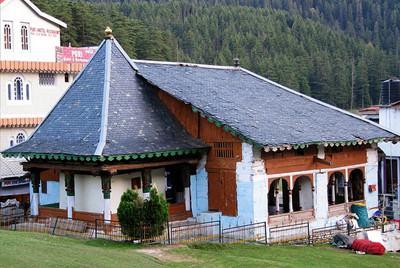
khajji-nag-temple3 #Khajji Nag Temple
This temple is dedicated to Khajji Nag, who is the Lord of the Serpents.Inside the temple, there is a mandapa where visitors can view hanging images of the Pandavas along with the defeated Kauravas from the roof of this temple, appearing in a roundabout way. The chambers of this temple are carved out of wood. The construction of this temple began in the 10th century AD and is reflected in the architecture of the temple that exhibits a mix of Hindu and Muslim style. Located in the district of Chamba, this temple is considered significant and is visited by pilgrims regularly. The interiors of this temple have idols of Lord Shiva along with Goddess Hadimba.

Khajjiar Sightseeing
Loading image... Loading image... Loading image... Loading image...

Punakha Sightseeing

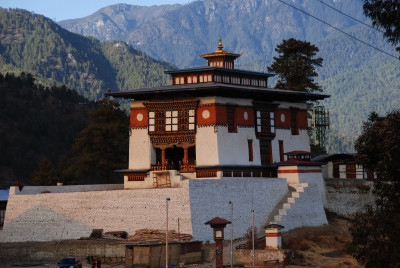
Punakha : Punakha served as the capital of Bhutan until and still it is the winter seat of Je-Khenpo (the chief abbot). Blessed with temperate climate and owing to its natural drainage from Pho Chhu (male) and Mo Chhu (female) rivers, the Punakha valley produces abundant crops and fruits. There are splendid views of the distant Himalayas at Dochula pas on Thimphu – Punakha road.

 PunakhaDzongInSpring

#Punakha Dzong
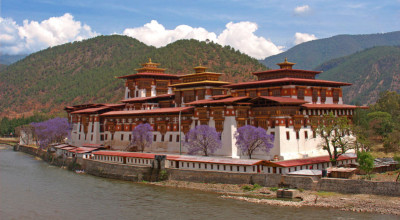
Built strategically at Thimphu town the junction of Pho Chhu and Mo Chhu rivers in 1637, by Shabdrung Ngawang Namgyal
to serve as the religious and administrative centre of the region, Punakha Dzong has played an important role in Bhutan’s history. Damaged by four catastrophic fires and an earthquake, the Dzong has been fully restored by the present King. The Dzong is open for visitors during Punakha festival and in summer months when the monk body moves to Thimphu.

#Chimi Lhakhang
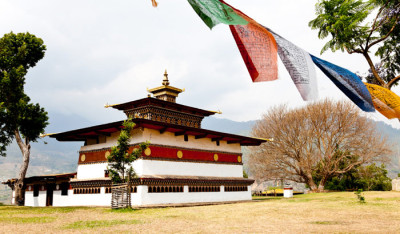
The Chimi Lhakhang, situated on a hillock in the centre of the valley, is dedicated to Lama Drukpa Kuenley, who in the late 15th century used humour, songs and outrageous behavior to dramatise his teachings and due to this also known as “Divine Madman”.
This temple is also known as the temple of fertility. It is widely believed that couples who do not have children and wanting one, if they pray at this temple, they are usually blessed with a child very soon. It is about 30 minute walk across field from the road to the temple. The trail leads across rice fields to the tiny settlement of Pana, meaning “field”. It then follows a tiny stream downhill to Yoaka and across more fields before making a short climb to Chimi Lhakhang.

Chimi-Lhakhang
 Khamsum Yulley Namgyal Chorten #Khamsum Yulley Namgyal Chorten
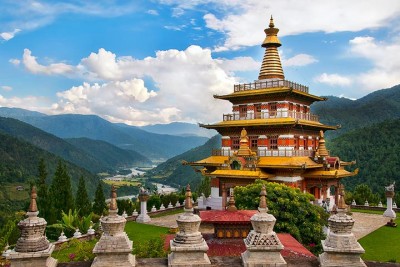
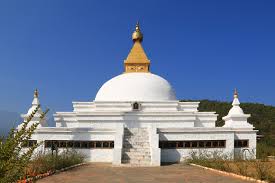
A beautiful hike takes one to the regal Khamsum Yuelley Namgel Chorten, which was built to remove negative forces and promote peace, stability and harmony in the changing world.
The Chorten dominates the upper Punakha Valley with commanding views across the Mo Chhu and up towards the mountainous peaks of Gasa and beyond.


#Sangchhen Dorji Lhuendrup Lhakhang Nunnery
Perched on a ridge amid pine trees and overlooking valleys of Punakha and Wangduephodrang, gleams the magnificent structures of Sangchhen Dorji Lhuendrup Lhakhang(Temple). The temple houses a 14-foot main bronze statue of Avalokiteshvara (Chenrigzig chagtong chentong). Other statues include those of Guru Padmasambawa, Gautama Buddha, Zhabdrung Ngawang Namgyel, Tsela Namsum, the 21 Taras and Tsepamay (Buddha of longevity). The Avalokiteshvara statue, one of the biggest in the country, was the handiwork of entirely local Bhutanese artisans. The temple complex also houses a permanent higher learning and meditation centre for nuns where, apart from religious trainings, it provides life skill training such as tailoring, embroidery, statue making and thangka painting.

 Sangchhen Dorji Lhuendrup Lhakhang Nunnery
 talo #Talo
The village of Talo (alt. 2,800m) which is scattered along the hill slopes, known for its cleanliness and hygiene among Punakha villages. 
Talo Sangnacholing is built on a plateau and has majestic view of surrounding villages. The beautiful farm houses of the village have its own flower gardens and on the hill slope corns and sweet peas are grown in abundance. The women of Talo are particular known for their beauty.
#Punakha Ritsha Village
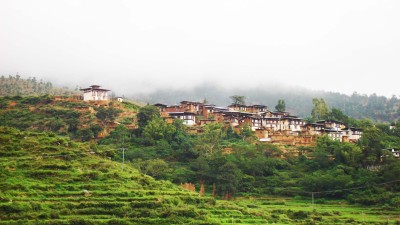
Bhutan’s Punakha valley is famous for rice farming where both red and white rice are grown along the river valleys of Pho and Mo Chhu, two of the most prominent rivers in Bhutan. ‘Ritsha’ meaning ‘at the base of a hill’ is a typical village in Punakha. The village houses are made of pounded mud with stone foundations. Each house is only two storey high surrounded with gardens and the rice fields. The gardens also usually have fruit bearing plants like oranges and papaya among the organic vegetables. In the recent years, the farming work is mechanized and power-tillers instead of bullocks are used to plough the fields and villagers have become relatively prosperous. This is a model rice growing village in western Bhutan.
 rinchengang-village

Punakha Sightseeing

Loading image... Loading image... Loading image... Loading image...

Phuentsholing Sightseeing

Phuentsholing – The frontier town, it is a thriving commercial centre, situated directly at the base of Himalayan foothills. It is a fascinating place where different ethnic groups mingle prominently Indian, Bhutanese and Nepalese. Being the border town, Phuentsholing serves as the convenient entry/exit point for Bhutan and also the important link to visit the Indian state of West Bengal, Sikkim and Assam.

 visitphuentsholing lhakhang at phuentsholing

#Zangtho Pelri Lhakhang
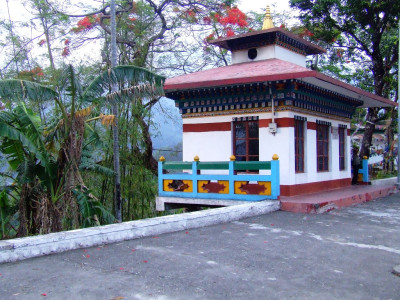
Situated in city centre, this small temple represents the heaven of Guru Rinpoche. On ground floor there are statues of eight manifestations of Guru Rinpoche and paintings on Buddha’s life while the next floor contains eight Bodhisattavas and statues of Avalokiteshvara and Shabdrung Ngawang Namgyal. On top floor, there is a main statue of Amitabha.

#Kharbandi Goemba
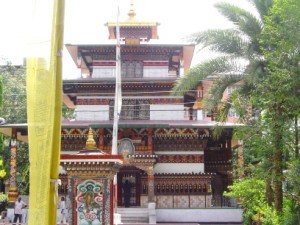
Founded in 1967 by Royal Grand Mother, Ashi Phuntsho Choedron and situated at the altitude of 400m, this beautiful monastery contains paintings on the life of Buddha, statues of Shabdrung Ngawang Namgyal and Guru Rinpoche. From the monastery garden there is a fascinating view of Phuentsholing town and surrounding plains.
kharbandi goemba

Phuentsholing Sightseeing

Loading image... Loading image...

Thimphu Sightseeing

Thimphu : Thimphu formerly spelled Thimbu,is the capital and largest city of Bhutan.It is situated in the western central part of Bhutan and the surrounding valley is one of Bhutan’s dzongkhags, the Thimphu District. The city became the capital of Bhutan in 1961. It has a population of 91,000, as of 2011.The city is spread out laterally in a north-south direction on the west bank of the valley formed by the Raid k River, which is known as the Wang Chuu or Thimphu Chuu in Bhutan. Thimphu is spread over an altitudinal range between 2,248 metres (7,375 feet) and 2,648 metres (8,688 feet).Unusually for a capital city, Thimphu is not served by an airport, but relies on the Paro Airport.

 thimphu-dzong

#Visit the Dzong
The sprawling
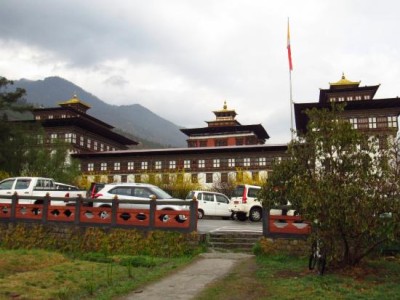
Tashichho Dzong with its golden-red roofs is the fortress-monastery that is the seat of government offices, the headquarters of the monks and also houses the throne room and offices of the king. The Dzong was originally built in the 17th century but destroyed by fire and earthquakes multiple times and rebuilt.  Make sure that you visit it after 5pm to get a glimpse into its rich woodwork and mandala paintings.

#Hit the bulls eye
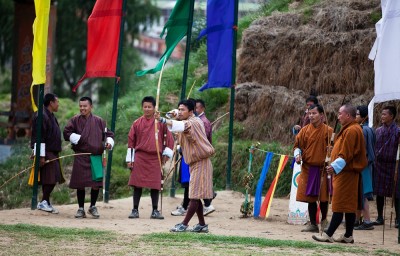
Archery is the country’s national sport and if you are in the capital over the weekend, you can catch an archery tournament at the Changlimithang Archery Ground,
where traditional bamboo has been increasingly replaced by hi- tech carbon bows. Enjoy the impromptu song and slow motion dance as well as the verbal exchanges and combat that the teams break into when someone hit’s the bull’s eye or misses the mark.
hit bull eye
 changangkha temple #Changangkha Lhakhang
Situated on a small hill overlooking the Thimphu valley the monastery was built in the 13th century by Lam Phajo Dugom Zhigpo. Children born in Thimphu are taken to this temple because it is considered the spiritual home of the children born in Chang valley.Names such as Tandin and Sonam are given from this temple to new born babies taken for blessings from the protector deity Tamdrin.The central statue in the temple is Avaloketesvara, Buddha of compassion, in his manifestation with 11 heads, a thousand hands and eyes; it is built with bronze and plated with gold.

#Dechen Phodrang
At the end of Gaden Lam is the Dechen Phodrang, the site of Thimphu’s original dzong.
Since 1971 it has been the state monastic school, where an eight-year course to almost 500 monk students is provided. The 12 century paintings in the monastery’s Guru Lhakhang have been restored and the upper floor features a large figure of Zhabdrung Ngawang Namgyal as well as a goenkhang (chapel dedicated to protective deities and only men are allowed inside it). Dechen Phodrang literally means palace of the great bliss.
 dechen phodrang
 Dochula #Dochula
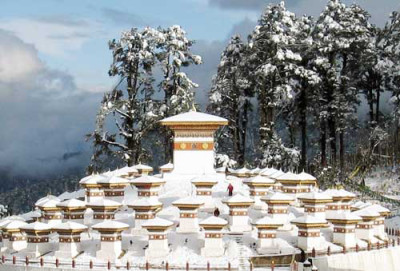
Marked by an array of prayer flags & 108 chortens, “The Dochula pass” is at an altitude of 3,050 meters above sea-level and it is the first high pass in the western region which is 23 kilometers from Thimphu on the way to Punakha. On a clear day a panoramic view of the Bhutanese Himalayas can be seen from here. The 108 chortens and the Druk Wangyel Lhakhang, built by Queen Mother Dorji Wangmo Wangchuck to honor His Majesty the Fourth King in 2003, are some of the main attractions there. The Druk Wangyal Chorten stands on the crest of Dochula overlooking the unique spiral of 108 chortens. More than half an hour drive will take you there.
#Institute for Zorig Chusum
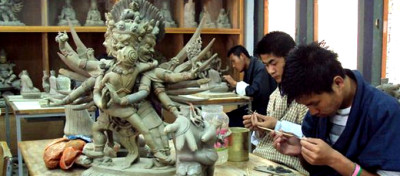
Also known as the painting school, the institute has students learning the 13 traditional arts and crafts of Bhutan.
The institute offers an eight-year course in the techniques of traditional art in 13 traditional arts such as painting, woodcarving, clay sculpture, mask making and so on. The institute also teaches traditional thangkha painting and a few foreigners come to Bhutan to learn the art. The institute has a showroom where works of students are sold at reasonable price.
 institute for zorig
 kuensel phodrang #Kuensel Phodrang (Buddha Point)
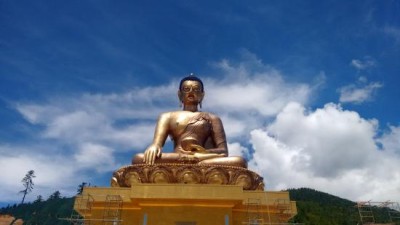
It is one of the most happening points in Thimphu. It is locally named Buddha Point but the actual name is Kuensel Phodrang. It is called the Buddha point because the largest statue of Buddha in the country sits there. The 51.5 meter bronze statue is three storied with several chapels. The body of Buddha is filled with 125000 smaller statues of Buddha. The well paved road leading to the Buddha is mostly used for drives, cycling, jogging and walk apart from those who go there to pay homage to Buddha. The night view of Thimphu from this point is ravishing and magical.
#National Institute of Traditional Medicine
The National Institute of Traditional Medicine is a training centre for medical practitioners. Herbal medicines are prepared and dispensed here. Bhutan has rich tradition of medicine based on natural remedies derived mainly from plants, earth and some animals. The institute collects medicinal plants from remote corners of Bhutan’s Himalayan region such as Lingzhi, Laya and Lunana. The institute has facility for outpatients, training, research and production of traditional medicines. The institute also has an exhibition room. The institute was established in 1978.
 national institute of traditional medicine
 stamp heaven #Stamp heaven
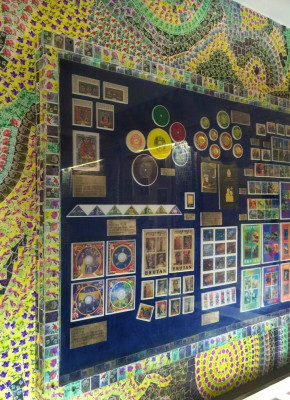
Bhutan is a philatelist’s dream with round, square, rectangular, triangular and even 3D stamps with different series devoted to different objects and events. Visit the philately counter at the National Post Office at Chang Lam to buy some local stamps as gifts.  For a unique souvenir, buy a personalised stamp with your picture on it.

Thimphu Sightseeing

Loading image... Loading image... Loading image... Loading image...

Port Blair Sightseeing

Port Blair : Port Blair is the capital city of Andaman and Nicobar Island. It is the largest city of the Union Territory as well and located on the east coast of south Andaman Island. The city is named after the Lieutenant Archibald Blair who established a colony here in the year 1789. The city is undoubtedly one of the most beautiful places of this exotic island. Remarkable for its clean and serene beauty, Port Blair is visited by thousands of tourist from all over the world. This wonderful place is treasure house of marine life thriving on its wide starched coastal beaches. Known for famous beaches and eye catching vistas, this place is heaven for travelers.

 
cellular_jail

#Cellular Jail
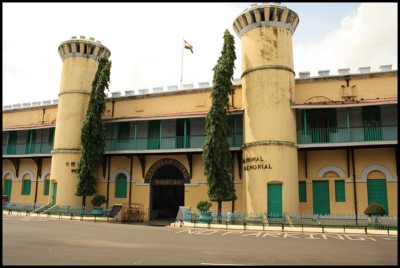
During the British occupation of India, the prisoners were sent to Cellular Jail, to keep them far off from the revolution.
Once in these places, it was very difficult to get out and this led to the death of a number of prisoners. After a brief occupation by the Japanese forces during World War II, the town of Port Blair became the base of the Azad Hind Fauj. The execution rooms, the cells, the torture rooms and different areas of the jail are open for public viewing.
Presently, there are no prisoners and the jail is open to visitors. Inside the compound of the Cellular Jail a well maintained, beautiful garden has been created. There is a light and sound show every day at 5 pm in Hindi and 6 pm in English.

#Ross Island
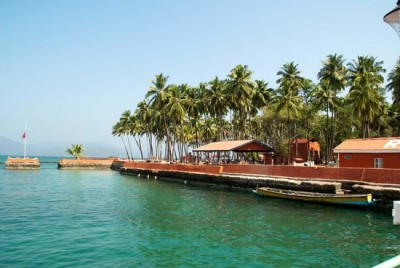
Ross Island is a popular tourist spot with remnants of the Victorian British era. Some of the remains of British era that can be seen in the island include old buildings like the chief commissioners house, Presbyterian Church, state ball room, an old Andamanese home bakery, swimming pool and a hospital. A museum in Ross Island, maintained by Indian Navy, has a collection of pictures depicting the island in its full glory. Currently, the entire island is being maintained by Indian Navy. The Island is open for visitors from 8.30 am to 4.30 pm on all days except Wednesday. An entry fee of INR 20 is collected. Ross Island is an ideal place for those who want to learn about the history of British occupied India and their activities in this region.
ross-island
 chidiya-tapu #Chidiya Tapu
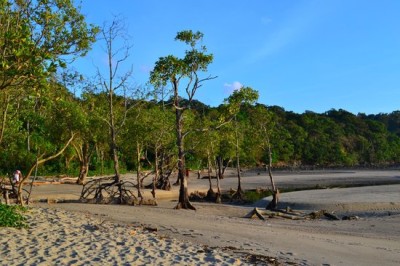
Chidiya Tapu is a tiny village in the southernmost tip of South Andaman. It is also known as the bird island. The region has a number of green mangroves and a lush forest cover. Birds are the major attraction here. There is a forest guest house at the top of the hillock that provides sunset views as well as views of the islands beyond Chidiya Tapu. The water in this area is full of colourful corals which makes it suitable for snorkelling.
#Corbyn’s Cove
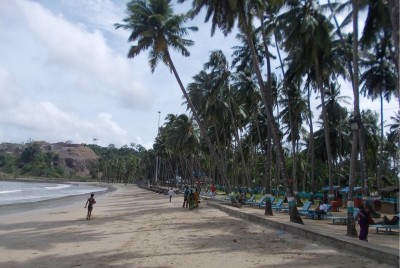
Corbyn’s Cove is situated near Port Blair and attracts tourists for its soft sandy beach with coconut palms.
It is an ideal spot for swimming, scuba diving and boating and also for watching the sunset. During the Japanese occupation of
Corbyn’s Cove, pill boxes and bunkers were made which can be still seen on the beach. A major part of the beach was washed away and destroyed in the tsunami of 2004.
 -corbyn-s-cove-beach
 Inside_the_Anthropological_Museum_of_Andaman

#Anthropological Museum
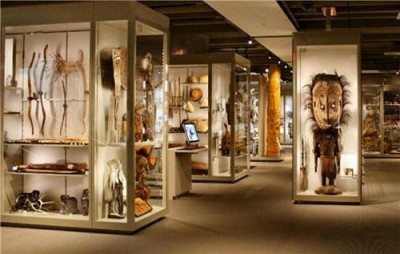
The Anthropological Museum is one of the most visited places in town. It is maintained by the Anthropological Survey of India.
The museum illustrates the tribal life and culture. It has an exhibition of the tools and weapons that are used by the tribes as well as photographs showing the different tribes, existing and extinct. There are also items and collections showing the history of the island archipelago, a library with books of different types and by various authors who have written widely on the Union Territory. Sometimes, the museum also organises documentaries and short films showing the life of the tribes and the different social customs and cultures of the Union Territory.


#Andaman Water Sports Complex
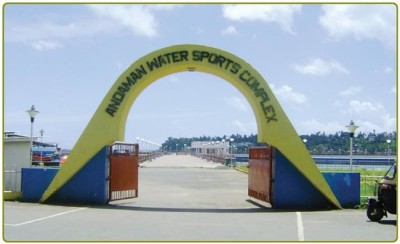
The Andaman Water Sports Complex, also known as the Rajiv Gandhi Water Sports Complex, is located close to the Cellular Jail in the north-west part of Port Blair. The sports complex offers a range of water sports facilities and adventures. Activities like sail boating, parasailing, paddle boating, water scooters, rowing, water skiing, etc. are possible in the water sports complex.
Besides the water activities for all age groups, the monument commemorating the Battle of Aberdeen can be seen within the complex structures. The artificial waterfall in the region is also another attraction. There is a children’s park
nearby.

 andaman-water-sports
 Gandhi Park #Gandhi Park
Gandhi Park in Port Blair is a small and beautiful park with amusement rides, a garden, a small narrow trail around a small lake inside the premises, water sports, historic remains of a Japanese temple and a war bunker.
The Gandhi Park was built in only 13 days around the Delthamani tank which served as Port Blair’s only source of drinking water in those days. This park is a good source of entertainment, especially for children.
#Jolly Buoy Island
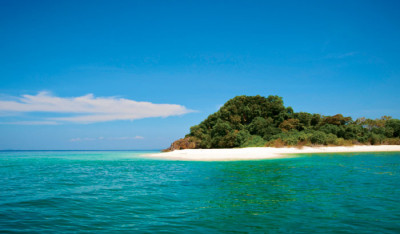
Jolly Buoy Island is situated in South Andaman Island. Located very close to Wandoor, Jolly Buoy Island is part of the famous Mahatma Gandhi Marine National Park along with a few other islands. Jolly Buoy Island is one of the prime tourist destinations in Andaman and Nicobar as the varied landscape includes mangrove swamps, tropical rainforests, pristine white sandy beaches, and coral reefs.The main activities one can experience at Jolly Buoy Island are snorkelling and scuba diving. Boat trips can also be organized into the sea for dolphin spotting and fishing.One can also visit Wandoor or the nearby Red Skin Island while at Jolly Buoy Island.
Jolly-Buoy-Island
 samudrika museum  #Samudrika Marine Museum
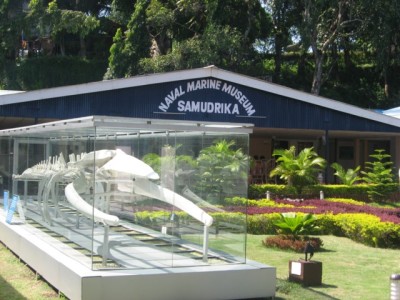
Samudrika Marine Museum in Port Blair, managed by the Indian Navy, is also known as Naval Marine Museum.This museum is a perfect place to know about the various aspects of marine ecology. The five galleries found here are divided based on the history of Andaman Island, geographical information, tribal communities, archeology and marine life. The main attraction of the museum is the large skeleton display of a blue whale. The museum gives information about the various aspects of coral and marine life in lay man’s language. One of the best aquariums is maintained here with an extensive collection of fishes on display. You will also find informative displays on the islands’ tribal communities.
#Mount Harriet
Mount Harriet is a 365 metres high peak in the South Andamans and is the highest in the area. With beautiful views from the hill top, it served as the summer headquarters of the chief commissioner during the British rule. There is a nature trail from this hill to the Madhuban forest. From this place, one can view the Indian Ocean and the other islands.
-mount-harriet

Port Blair Sightseeing

Loading image... Loading image... Loading image... Loading image... Loading image...

Nuwara Eliya Sightseeing

Sri Lanka Holiday Packages

Nuwara Eliya : Nuwara Eliya (City of Lights) is a resort city in the Central Mountain Range of Sri Lanka. Blessed a with salubrious climate, breathtaking views of valleys, meadows, mountains and greenery; it’s hard to imagine that Nuwara Eliya is only 180 Km from the hot and humid Colombo. Nuwara Eliya, also known as ‘Little’ England’, was the favorite hill station of the British who tried to create the resort into a typical English Village.

 Hakagla garden

#Hakgala Botanical Garden (Ashok Vatika)

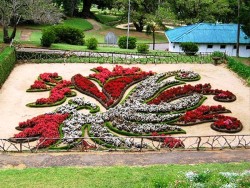
Hakgala Botanical Garden  is one of the five botanical gardens in Sri Lanka. It is the second largest garden in Sri Lanka. The garden is contiguous to Hakgala Strict Nature Reserve.The garden has a cool temperate climate because of altitude is 5,400 feet above the sea level.There are over 10,000 species of flora planted here and during the Spring season in Nuwara Eliya thousands of visitors come to see the blooms here. The garden is famous for number of species of Orchids and Roses are planted there.

#Seetha Amman Temple
Seetha Amman Temple  is located in the village of Seetha Eliya (also known as Sita Eliya). This place is believed to be the site where Sita was held captive demon king Ravana, and where she prayed daily for Rama to come and rescue her in the Hindu epic, Ramayana. On the rock face across the stream are circular depressions said to be the footprints of Ravana’s elephant.
sita-amman-temple
 Ajneyar temple #Anjaneyar Temple
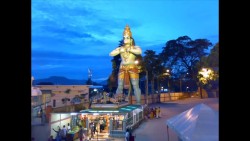
This is the first Anjaneyar Temple in Sri Lanka and also the only Panchamuga (five faced) Anjaneyar Temple in Sri Lanka. Its the only temple in the world to have a chariot for Anjanyear. The chariot festival is held annually end Dec/ beginning of January.
#Play Golf at Nuwara Eliya
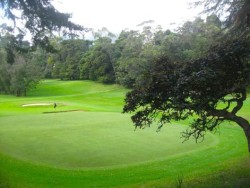
The venue for many tournaments, this course is challenging and exciting, with many characteristics and distinctive natural elements that golfers should watch out for. The weather and scenic surroundings will make your entire sojourn peaceful and happy, more so since the Club offer accommodation and all modern amenities along with great service always accompanied by a smile.

 
 golf club

Nuwara Eliya Sightseeing

Loading image... Loading image... Loading image...

Hyderabad Sightseeing

Hyderabad : Hyderabad has developed into one of the major hubs for the information technology industry in India which has earned it the additional sobriquet “Cyberabad”.In addition to the IT industry, various biotechnology and pharmaceutics companies have set up their operations in Hyderabad owing to its established Public sector in Life Science Research and Genome Valley. The city houses the most expensive residential real estate in Andhra Pradesh in Banjara Hills and Jubilee Hills. The city is home to the Telugu Film Industry, either the second- or third-largest in India, depending on the basis of measurement, known popularly as Tollywood. A Residents of Hyderabad are generally called Hyderabadis. Located at the crossroads of North and South India, Hyderabad has developed a unique culture that is reflected in its language and architecture.

 ramoji-film-city #Ramoji Film City

Ramoji Film City makes its way to every traveller’s list because of its magical theme around cinema, which is the most common love of every Indian. The only one of its kind in India, this holiday destination offers something special to everyone. The world’s largest integrated film city, spread across 2,000acres ensures that every visitor makes most from the day spent here. Features include well-defined categories of entertainment suited for different ages from Eureka, the performance arena modelled on the lines of royal forts hosting live shows, to getting a tour of a typical film studio, multi-cuisine restaurants, shopping venues, kids’ park, and even a bird park. This destination can be enjoyed over a day trip or one could stay back at this holiday destination.

#Nehru Zoological Park
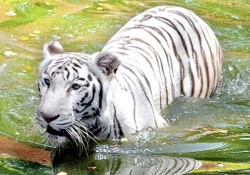
The Nehru Zoological Park is a wonderful blend of ecological programmes, animal habitats, research facilities, and other such attractions. Being a well-equipped zoo, visitors can comfortably spend an entire day here enjoying several facilities such as toy train, kids park, hired bicycle rides, boating, walks around large aquariums with fresh water and marine aqua life on display. It has India’s first butterfly park and jungle safari. Jurassic Park with live sized models of the extinct species is a major draw for children. Boasting of nearly 1,500 specimens of birds, animals, and reptiles the Nehru Zoological Park also encourages adoption of wild animals by the public.
hyderabad-zoo-park
 Birla mandir #Birla Mandir
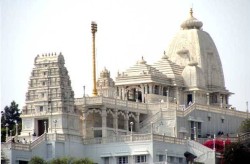
The Birla Mandir is an enchanting modern temple built atop the Kala Pahad, the twin hillock of the Naubat Pahad. With mixed architectural styles from Odhisha and South Indian, the place of worship is embellished with exotic epic scenes from the Ramayana and Mahabharata that are finely sculpted in marble. The inner shrine of the temple has an 11ft tall replica of Tirupati Venkateswara. Revel in several marble carvings depicting Indian mythology in the adjoining ‘Mukha Mandapam’. The temple also houses consorts of Venkateswara, Padmavati and Andal as well as has a separate shrine dedicated to Buddha.
#Char Minar
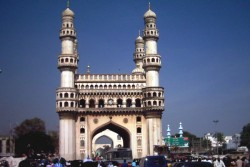
The epic signature of the city, Char Minar makes for a wonderful sight. Located in the heart of Hyderabad’s old city, surrounded by Mecca Masjid, built using bricks from Mecca and Laad Bazaar – a boisterous shopping street, this landmark is laced in history. Built in 1591 by Muhammad Quli Qutub Shah, it was constructed to commemorate the founding of Hyderabad and also to ward of a deadly epidemic that was rampant then in the Golconda region. Graced by 4 minarets soaring almost 50ft in height, it has a mosque and 45 prayer spaces.
 charminar
 qutub-sahi-tombs #Qutub Shahi Tomb

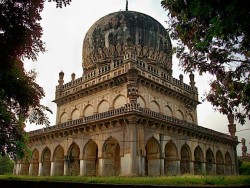
Qutub Shahi Tombs ensconced against the lovely backdrop of the picturesque Ibrahim Bagh. These represent the final resting ground of rulers of the founding dynasty of Hyderabad. The most authentic and majestic display of Persian, Hindu, and Pathan architectural designs dedicated to the seven kings who ruled Golconda for nearly 170 years, the rulers themselves built these tombs.


#Salar Jung Museum
The Salar Jung Museum has illustrious neighbours like the Charminar, Mecca Masjid and State Central Library. One of the must see places to visit in Hyderabad with family, this is among India’s premier museums with 38 galleries spread over three buildings. Nawab Mir Yousuf Ali Khan, who also lent his name to the museum, acquired a rich repository of artistic achievements of diverse European, Asian and Far Eastern countries of the world; a major chunk of the collection is on display.

 salarjung-museum
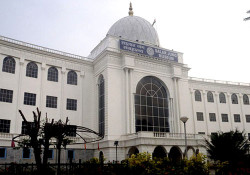
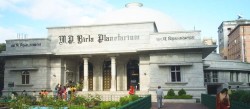
 birla museum #Famous Birla Museum
One of the best-rated science institutions world-over, the Birla Science Museum is amongst the busiest and most attended places in India. It provides wholesome exploration of science and its various arms with a planetarium that uncovers several mysteries of the universe. A unique Participatory Science Museum with Archaeology and Fine Art sections is a huge draw. The Archaeology and Fine Arts section has rare exhibits that have been collected and excavated. Dinosaurium, a Natural History Gallery and the breath-taking Art Gallery have beautiful murals, traditional artefacts from various Indian states, and live projects in the Science Projects wing are on offer under one roof.

Hyderabad Sightseeing

Loading image... Loading image... Loading image... Loading image... Loading image...

Calicut Sightseeing

Calicut : Kozhikode, known as Calicut during British rule, was the capital of the highly powerful and well cultured Zamorins. Later it became the capital of the Malabar region during the period of British rule. With its long serene coastline, picturesque mountains, gorgeous waterfalls and lively forests, wild life sanctuaries and historical sites, Kozhikode unveils a visual treat to any visitor.

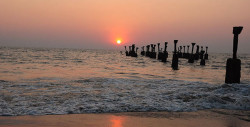
 Kozhikode-_Beach #Kozhikode Beach

The Kozhikode Beach is situated near the town of Kozhikode and is known for its old world charm and natural beauty. The beach has two crumbling piers that stand toward the middle of the sea and each of them are them are more than hundred years old. The beach also houses a lighthouse, Marine Water Aquarium and Lions Park. The beach is a perfect setting for tourists wanting to enjoy the sunrise or sunset.

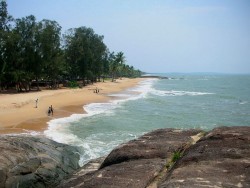
#Kappad Beach
The popularity of the Kappad Beach is owing to the fact that it was the place where Vasco da Gama, the famous world explorer first set his foot. A stone monument is erected on the beach to commemorate the significant historical event. This rock studded beach is called by the locals as Kappakkadavu. It is considered to be the gateway to the Malabar Coast. Tourists can reach Kappad by availing the backwaters that offers an enjoyable experience. They can reach the beach by taking a ride down the backwaters through the River Korappuzha.
kappad-beach-
 Pazhassi-Raja museum #Pazhassi raja Museum
The Pazhassi raja Museum is situated in East Hill, at a distance of 5 km from the Kozhikhode town. It houses several historical and archaeological art facts that are significant to the region such as the antique bronzes, gold coins, old paintings, ancient umbrella stones and monuments that are megalithic in nature such as the dolmonoid cysts. The art gallery and museum was named after Pazhassiraja Kerala Varma of the Padinjare Kovilakom of the royal family of Kottayam. Pazhassiraja was known for leading the renowned ‘Pazhassi Revolt’ and introducing guerrilla warfare against the British colonialism.
#Peruvannamuzhi Dam
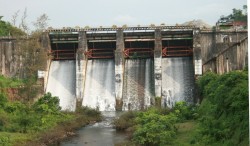
Peruvannamuzhi is situated about 60 km northeast of the district headquarters. The Peruvannamuzhi Dam is located amidst the hills and serves as an ideal picnic spot. The reservoir offers facilities for rowboat and speedboat cruises that include a visit to the ‘Smaraka Thottam,’ a garden built in the memory of the region’s freedom fighters. A bird sanctuary, uninhabited islands and crocodile farm add to the charm of the place.
dam
 kadalundi bird sanctuary #Kadalundi Bird Sanctuary

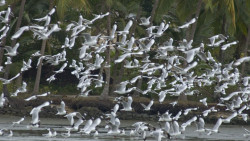
The Kadalundi Bird Sanctuary is situated at a distance of 19 km from Kozhikode and has a river running across it. It is spread over a cluster of islands and is surrounded by hillocks, where the River Kadalundi flows into the Arabian Sea. The hillocks provide a good view of the sea and the river mouth. The place is locally known as Kadalundi Nagaram. The sanctuary houses some 100 different species of native birds and more than 60 species of migratory birds such as terns, seagulls, sandplovers, sandpipers and many more. A variety of flora and fauna and several kinds of fishes, crabs and mussels can also be found in this sanctuary.

Calicut Sightseeing

Loading image... Loading image... Loading image... Loading image...

Wayanad Sightseeing

Wayanad : The name Wayanad is derived from Vayal Nadu which means the land of paddy fields. It is a picturesque plateau situated at a height between 700 meters and 2100 meters above the mean sea level nested among the mountains of the Western Ghats on the Eastern portion of North Kerala and on the sides of Tamil Nadu and Karnataka States. The culture of Wayanad is mainly tribal oriented. Though considered as backward, this District is perhaps one of the biggest foreign exchange earners of the State, with its production of cash crops like pepper,cardamom, coffee, tea, spices and other condiments.

 pookode-lake- #Pookode Lake

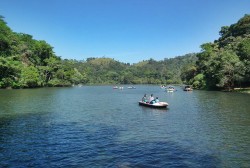
Pookode Lake is another must-visit on the list of Wayanad tourist places. It is a fresh water lake settled amidst the evergreen forests of Wayanad. The map of India is what the lake is shaped like. An abundance of blue lotus and fresh water fish inhabit the water body, enhancing its glorious beauty.Facilities like boating, well maintained children’s park, aquarium and a handicrafts’ emporium is made available here by the District Tourism Promotion Council. This is an ideal picnic spot for families and a great place for a hike.

#Lakkidi View Point
Lakkidi View Point is one of the highest peaks in Wayanad and receives the 2nd highest rainfall in the whole world. From here, you get a bird’s eye view of the scintillating valleys and mountain ranges of the region. Pookode Lake is barely 3kms from here and is thickly vegetated.
Adorned with all these natural resources, it is also one of the richest biodiversity areas in the region and home to various species of herons as well as rare Indian birds among many other species of flora and fauna. It is a favoured picnic spot in this expanse.
lakkidi-view-point 1
 lakkidi-view-point #Thamarassery Ghat
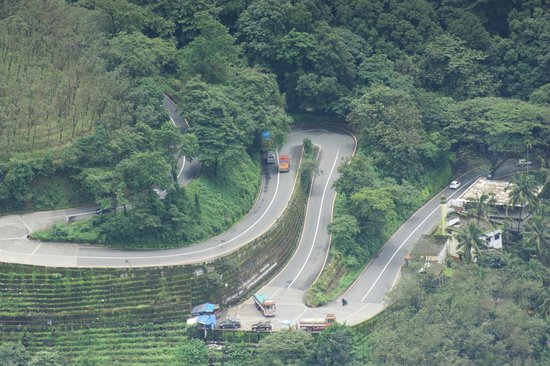
Thamarassery Ghat is along the national highway (NH 212) that connects Kozhikode with Wayanad. Since the road leads to Wayanad, this ghat pass is often called “Wayanad churam”.The ghat pass (“churam”) begins from Adivaram (downhills), while coming from Kozhikkode and ends at Lakkidi, the beginning of Wayanad district.
There is a view point at the top of the ghat pass just after the 9th hairpin and before reaching Lakkidi. You can stop at this place and enjoy the beautiful view of the serpentine roads through the hills.
#Meenmutty Waterfalls
The word Meenmutty, in Malayalam literally means the place where fish get blocked and is regarded as the largest waterfall in Wayanad. A 2km hike from the main Ooty road, this three-tiered waterfall with the height of 300 metres is a rare Wayanad tourist place that still remains untouched. Comfortable in its natural settings, Meenmutty waterfalls is the 2nd largest in Kerala. A separate hike through the moist dense forests leads one to each of the three tiers. This is a quiet and tiresome route that ends at a point with the most dreamy sights.
meenmutty_falls
 phantom rock #Phantom Rock

Phantom Rock is situated at Vaduvanchal which is around 13 km from Kalpetta. This rock is adjacent to the Ambalavayal town and has a skull shape. The skull shaped rock is locally called as Cheengeri Mala and offers great photographic opportunities.

#Ambalavayal Wayanad Heritage Museum
The Wayanad Heritage Museum is situated in Ambalavayal town and houses art facts that depict the history, heritage and culture of Wayanad. The museum has a wide collection of 14th century and 16th century sculptures and tribal art facts. This collection includes farming implements, jewellery, hunting and fishing weapons. It also houses stone weapons, ancient terracotta and local art. This museum is considered to be one of the best archaeological museums in the state of Kerala.
The museum is segregated into four blocks, namely Veerasmruthi, Devasmruthi, Gothrasmruthi and Jeevanasmruthi. Veerasmruthi comprises varied kinds of pictorial rock edicts that are called Veera Kallu or Hero Stones. These stones mention the valiant warriors belonging to the bygone era. Gothrasmruthi and Jeevanasnruthi blocks display articles related to tribal people. These articles comprise headgear, jewellery, hunting and fishing weapons, cowbells, farming implements and musical instruments. Devasmruthi has art facts that belong to the period extending between the Neolithic Age and the 17th century.
 ambalavayal

Wayanad Sightseeing

Loading image... Loading image... Loading image... Loading image...

Bhubneshwar Sightseeing
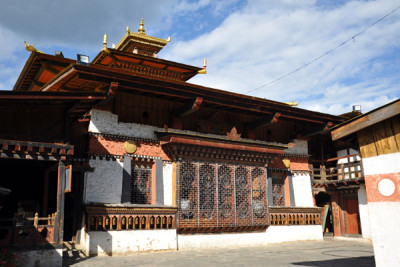
Bhubneshwar : Bhubaneshwar the ‘city of temples’, named after Tribhuvaneswar, ‘Lord of Three Worlds’, still preserves over 500 of India’s finest temples, around which the religious life of the city revolves. Mythological references and the epigraphic sources describe the area as Ekamra Kshetra and Saiva Pitha. In 1936, the Odisha (Odisha (Orissa)) became a separate province with Cuttack as its Capital, which was eventually changed to Bhubaneswar in 1956. Bhubaneswar forms the ‘golden triangle’–one of the most visited destinations in East India, for its proud possession of magnificent sculpture and majestic architectural heritage.

Lingaraj Temple #Lingaraj Temple
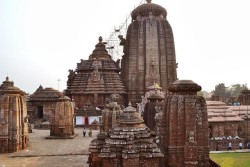
The Lingaraja Temple is the largest temple in the city of Bhubneshwar. The Temple is a marvelous example of the finesse of the Kalinga style architecture and was constructed in the 11th century AD. The primary deity of the temple is Lord Shiva who is worshipped in his Harihara form. The temple also contains several images of Vishnu and is a marvel to behold.
#Udayagiri and Khandagiri Caves
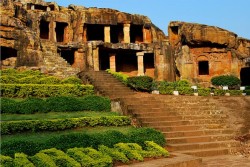
Khandagiri has 15 caves, while Udayagiri meaning ‘Sunrise Hill’, has 18 caves. These partly natural and partly artificial caves of archaeological, historical and religious importance are called lena or lena in the inscriptions. Dug out mostly during the reign of Kharavela for being the abode of Jain ascetics, the caves are located at a distance of 8 km from the destination. A double storeyed monastery, Ranigumpha in Udayagiri is the most important of this group.
Udayagiri and Khandagiri Caves
 
 mukteswara-temple #Mukteswara Temple
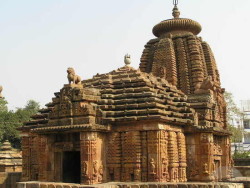
Mukteswara Temple, has sculptured gateways, diamond shaped latticed windows, decorated interiors and large number of carvings. Dedicated to Lord Shiva, who is considered as the most complex Lord amongst the Hindu Gods, the temple is imprinted with figures of ascetics in different poses of meditation. Name of the temple that means ‘Lord who gives freedom through Yoga’, is empowered by the sculptural images. Several small shrines that comprise numerous lingams of Lord Shiva, are located within the temple.
#Raj Rani Temple
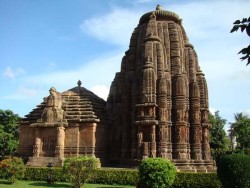
The small temple is decorated with carvings that stand testimony to the architectural cognizance of Vishwakarma Moharana sculptors. Regarded as a gem of Nagara architecture, ‘Orissan style’, the temple has been carved out of red sandstone. Covered with exquisite carvings of lean Sadhus or holy men as well as voluptuous women encrusted with jewels, the temple complex also has a tank that is still in use by devotees.
Raj rani Temple, dating from 11th century, is famous for its sculpted figures and the successive tiers of projections rising to form its 18 m high tower. Spire, reminiscent of the temples of Khajuraho, along with a square sanctuary and its interior and exterior surfaces are the chief features of the temple. Fine sculptures of dikpalas or guardians of the eight directions carved around the shrine are prominent highlights of the temple.
raja rani temple
 
 parasurameswara-temple #Parasurameswara Temple

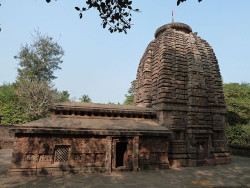
The temple is built in the Nagara Style and is dedicated to the Hindu deity Lord Shiva. The temple is exemplary of the Stone carving mastery of the artisans and is decorated with the most intricate carved sculptures of various Hindu deities.

Bhubneshwar Sightseeing
Loading image... Loading image... Loading image... Loading image...