Author Archives: Om

Home / Articles posted by Om ()

Jamnagar – Dwarka Sightseeing

Jamnagar : Jamnagar is a city in the state of Gujarat located in the Gulf of Kutch. One of the largest cities of the state, it is also the administrative headquarters of the Jamnagar district. It was once the capital of the former state of Nawanagar, which was founded in 1540 A.D. by Jam Raval. It is also known as the ‘Oil City’ due to the presence of two important oil refineries of India. Reliance Industries has established the largest oil refinery in the world here and Essar Oil Refinery is also located near Vadinar in Jamnagar. Before the advent of these oil refineries, the population of the city was primarily involved in the manufacturing of brass and hence, the city was known as the ‘Brass City’.
 Vibrant of Gujarat
05 NIGHT / 06 DAYS
1N Sasan Gir – 1N Diu – 1N Dwarka
1N Jamnagar – 1N Ahmedabad
Standard : INR 19,900
Dwarka Darshan
02 NIGHT / 03 DAYS
2N Dwarka
Standard : INR 6,300
#Dwarkadhish Temple / Jagat Mandir
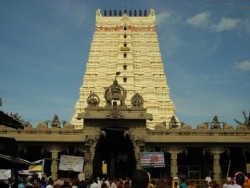
Dwaraka is known all over the world for the Dwarkadhish temple, the ‘Lord of Dwaraka’. This temple is also known as the Jagat Mandir or the temple of the world. This temple was constructed over 1400 years ago and houses the image of Lord Krishna. This temple is one of the most famous pilgrimage place for the Hindus and attracts pilgrims from all over the world. This temple is magnificently built on the traditional lines and has five floors supported by 60 columns. The temple is profusely carved from the base to the pinnacle. The temple is built of sandstone. The interior is simple while the exterior is covered with elaborate carvings. Some of the major festivals of Janmashtami and Navratri are celebrated with great enthusiasm and rejoicing in the Dwarka. After visiting the main temple, some of the devotees visit the Shankhoddhar Beyt or Beyt Dwaraka.

Dwarkadheesh_temple

 Bala hanuman temple

#Bala Hanuman Temple
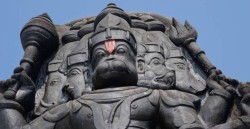
At the Bala Hanuman Temple on the southeastern side of the Ranmal lake, there has been continuous chanting of the prayer Shri Ram, Jai Ram, Jai Jai Ram since 1 August, 1964. This devotion has earned the temple a place in the Guiness Book of World Records. Early evening is a good time to visit as the temple and whole lakeside gets busy.
#Jain Temples
In the thick of Chandi Bazaar are four beautiful Jain temples. The larger two, Shantinath Mandir and Adinath Mandir, dedicated to the 16th and first Tirthankaras, in front of the post office near the .Darbar Gadh, explode with fine murals, mirrored domes and elaborate chandeliers. The Shantinath Mandir is particularly beautiful, with coloured columns and a gilt-edged dome of concentric circles
 Jain temple

Jamnagar – Dwarka Sightseeing

Loading image... Loading image... Loading image...

Somnath Sightseeing

Somnath : Somnath temple is located on the western coast of Gujarat and is one of the oldest and most revered temples of India and finds its reference in the most ancient texts like Shreemad Bhagavat, Skandpuran, Shivpuran and Rig-Veda which signifies the importance of this temple as one of the most celebrated pilgrimage sites or Tirthdham. In fact it is one of the twelve Jyotirlinga shrines of Lord Shiva which are considered to be very holy and each of the twelve Jyotrilinga is considered to be the manifestation of the Lord Shiva.
 Khushboo Gujarat Ki
07 NIGHT / 08 DAYS
1N Palitana/ Bhavnagar – 1N Sasan Gir
1N Diu1N Somnath – 1N Dwarka
1N Jamnagar – 1N  Ahmedabad
Standard : INR 25,900
 Somnath temple

#Somnath Temple
The legendary shore temple of Somnath is located near Veraval and is about 80 kms from Junagadh. The Somnath temple is one of the twelve most sacred shrines dedicated to Lord Shiva. The temple contains the Jyotirlinga of Lord Shiva. This temple has a very long history. According to the legends, the Somnath temple is very old and was originally built in gold by the Somraj, the Moon God. Later, it was rebuilt by Ravana, in silver; then by Krishna in wood and by Bhimdev in stone. Mahmud of Ghazni, upon hearing the description of the richness of the Somnath temple by Al Biruni, an Arab traveller, visited this temple in 1024 AD. At that time, this temple had about 300 musicians, 500 dancing girls and 300 barbers to shave off the heads of pilgrims. After a 2 days battle, Mahmud destroyed the temple and carried away jewels and gold to his homeland. Hence, a tradition got started, the Muslims destroy the temples and the Hindus rebuilt them. The Somnath Temple was raided again in 1927, 1934 and 1706. In 1706, this temple was raided by the Mughal emperor Aurangzeb. In all, the Somnath temple was rebuilt and destroyed eight times. This temple was finally rebuilt in 1950 with the support of Sardar Vallabhabhai Patel. The current temple was built as per the traditional designs on the original site by the sea and is a serene, symmetrical and sinuous structure. Today, this majestic temple is a replica of the earlier temple.

#Bhalka Tirth
Bhalka Tirth is situated halfway between the Veraval and Somnath. At this place, the Lord Krishna was mistaken for a deer and wounded by an arrow. The legendary spot is at the confluence of the three rivers. This place is entered through the small Sangam (confluence gate), known as the Nana. North of this sacred spot is the Suraj Mandir or Sun Temple. This ancient temple was destroyed by the Mahmud of Ghazni. The temple, with a freize of lions with elephant trunks, probably dates from the same time as the Somnath temple.
 Bhalka Tirth

Somnath Sightseeing

Loading image... Loading image...

Diu Sightseeing

Diu : Daman and Diu are the two tiny union territories which were the Portuguese enclaves. Geographically, Daman and Diu are the part of the state of Gujarat and connected to the mainland of Gujarat by a causeway. Diu is a tiny island in the Arabian Sea, about 11 kms. long and 3 kms. wide, separated from the coast by a narrow channel running through the swamp and two tiny mainland enclaves.  The island’s main industries are fishing, tourism, booze and salt. This beautiful island has excellent golden beaches, whitewashed churches, bazaar, colourful Lisboa streets, gorgeous climate, huge Portuguese fort, lush seafood and Gujarati weekenders who flock for the cheap booze and sunshine.
 Vibrant of Gujarat
05 NIGHT / 06 DAYS
1N Sasan Gir – 1N Diu – 1N Dwarka
1N Jamnagar – 1N Ahmedabad
Standard : INR 19,900
 All of Gujarat
08 NIGHT / 09 DAYS
1N Sasangir – 1N Diu – 1N Dwarka
1N Jamnagar – 1N Bhuj
2N Raan ( Dhordo )  – 1N Ahmedabad
Standard : INR 40,700
 DiuFort

#Diu Fort
Diu Fort is a very large and imposing structure, situated on the coast of the island.
This fort was constructed between 1535 and 1541 AD after the treaty signed between the Sultan of Gujarat and the Portuguese. The fort is surrounded by the sea on the three sides and a canal on the fourth side. The fort offers a magnificent view of sea. On the fort stands a giant structure which now houses a Light House and the Diu jail. The beam from the lighthouse reaches to about  32 kms. Several canons are still located on the top of the fort and peep out of the holes on the walls of this gigantic structure.

#Fortress of Panikota
Fortress of Panikota is a magnificent stone structure in the sea, built right at the mouth of the creek. This fortress can be reached only by a canoe or a motor launch. This fortress has a light house and small chapel dedicated to Our Lady of the Sea. The fortress offers a very beautiful view whether seen from the jetty, from the Fort, from the village of Ghoghla or from Diu proper.
 Fortress of Panikota
 St. Paul's Church #St. Paul’s Church
St. Paul’s Church is dedicated to the Lady of Immaculate Conception.
This church was built during the 17th century and the most elaborate of all Portuguese churches in India. St. Paul’s Church was founded by Jesuits in 1600 and then rebuilt in 1807. Inside it is a great barn, filled with heavy dark wood, with a small cloister, next door. The main entrance of the church is adorned with volutes and shell-like motifs.
#St. Thomas Church
St. Thomas Church is a lovely simple building housing the Diu Museum.
There is a spooky, evocative collection of worn Catholic statues. Once a year, on 1 November, this is used for a packed out mass. There are also some remains of the Jain temple. There is a guest house upstairs and you can also climb the roof for amazing views.
 St. Thomas Church
 2_GangeshwarTemple9 #Gangeshwar Temple
Gangeshwar Temple is situated 3 kms away from the Diu town in Fudam village. This temple is dedicated to Lord Shiva. There are five lingas which are located in the middle of the rocks on the seashore, and are washed by the waves of the sea. It is believed that these lingas were established here by the five Pandava brothers of the Mahabharata during their exile.

Diu Sightseeing

Loading image... Loading image... Loading image...

Keylong Sightseeing

Keylong : Keylong, also known as Kyelong or Kyelang, is the district headquarters of Lahaul and Spiti district of the state of Himachal Pradesh. This place is a fancy land of monasteries and Buddhism. Keylong is at an altitude of 3440metres on the Manali – Leh Highway. The place is cut off from the rest of the world as heavy snowfalls in the Rohtang pass, cuts out all road transport from the end of October to mid-May.
 The Highlands of Himachal
07 NIGHT / 08 DAYS
1N Mandi – 1N Manali – Rohatang Pass
2N Keylong – 2N Manali – 1N Chandigarh
Standard : INR 27,900
 Manali – Laddakh – Kashmir ( laddakh Road Trip )
10 NIGHT / 11 DAYS
1N Manali – 1N Sarchu – 4N Leh
1N Pangong – 1N Nubra – 1N Kargil – 1N Srinagar
Standard : INR 55,900
 khardang-monastery-keylong

#The Khardang Monastery
The Khardang Monastery or Khardang Gompa reflects the traditional culture and art of the region. Located at an altitude of 3500m, the monastery gives a picturesque view of the natural surrounding region. The building also has a library where one can find Buddhist literature, as well as Kangyur and Tangyur scriptures. Thankas and musical instruments like drums, horns as well as huge statues of the Lord Buddha are considered as the main attractions of the monastery.

#Shashur Gompa monastery
Shashur Gompa monastery is dedicated to a Zanskari Lama. Chortens, bells, conventional paintings and flags make the monastery appear even more beautiful. Devil dance is performed by the colorfully dressed monks during the month of June-July.
Shashur Gompa monastery
 tayul-monestary2 #Tayul monastery
Tayul monastery namely Tayul Gompa is assumed as the oldest monastery in the Northern region. The monastery is standing tall in the midst the mighty mountains. Interesting fables are associated behind the founding of the monastery. Once, Lama Serzang Rinchen of Khan Region in Tibet spotted this monastery when he was walking on and around the sacred Drilburi Peak. While walking on the peak, he spotted a small glade in the juniper forest. He showed the same to his pilgrimages, later he concluded that the place is an auspicious site to build a monastery and decided to name it as ‘Tayul’ which in Tibetan language means chosen place. Built in 17th century, the monastery is home to the Drugpa or Red Hat Sect of Buddhist monks.
#Guru Ghantal Monastery
Guru Ghantal Monastery. The monastery, also known by the name of the Trilokinath Temple, was founded by Guru Padmasambhava. The monastery is associated with the Drukpa order and is made of wood. Within, an image of ‘Boddhisatva Avalokiteshwara’ dominates. The white marble head of the monastery was installed by Padmasambhava himself, however it is now kept in safe custody so that it is not stolen away. Also, to be seen in this monastery are idols of Guru Padma Sambhava, Brijeshwari Devi and several other lamas.
Strange, but it is a fact that the monastery houses a black stone image of Hindu goddess Kali in its innermost chamber. This strengthens the belief that before being converted into a Buddhist religious place the monastery was a temple.
 Guru Ghantal Monastery
 trilok nath temple #Triloknath Temple
This is holy shrine is revered equally by Hindus and the Buddhists. Hindus consider Triloknath  deity as ‘Lard Shiva’  while the Buddhists consider the deity as ‘ Arya Avalokiteshwar ‘ Tibetan language speaking people called  him as ‘Garja Fagspa‘.This holy  shrine is so important that is it is considered as most scarred pilgrim thirth  next only to  kailash and  Mansarover . The uniqueness of   the temple lies in the fact that it  is the only temple in the whole world
where both Hindu and Buddhists  pay their reverence to the same deity . The temple is situated in the panoramic Chandra Bhaga valley to the western Himalayas . It is highly spiritual place where one gets the  spiritual  blessing of the lord of three universes i.e. Shri Triloknath jee by visit having this Darshan and offering ones prayers.

Keylong Sightseeing

Loading image... Loading image... Loading image... Loading image...

Barog Sightseeing

Barog : Barog is a small hill station in Solan district in the Indian state of Himachal Pradesh.   Lesser Traveled Himalayas
05 NIGHT / 06 DAYS
01 N Barog – 02 N Naldhera
01 N Shimla – 01 N Chail
Standard : INR 15,500
 Choor Chandni Peak

#Choor Chandni Peak
Choor Chandni Peak, having an elevation of 3,650 m above the sea level, is one of the most famous tourist attractions of Barog. The peak is situated at a height of 3,650 m above the sea level and is surrounded by pine trees. It is also known as the Choordhar Mountains as it gives an impression of various silver bangles sliding down the slope of the mountain on moonlit nights. A trek to the slope of the mountain will lead to the peak.

#Suketi Fossil Park
Suketi Fossil Park, which is situated on the banks of the Markanda River, is one of the most famous attractions of Barog. It was the first park in Asia to have been developed at the exact site where the actual fossils were found.The park has soft sandstone and clay rocks and is situated on the upper and middle Siwaliks. The park is famous for its life-size fibreglass model of the pre-historic animals whose fossil and skeletons were discovered at the site.
suketi_fosil_park
 karol tibba #Karol Tibba
Karol Tibba is a famous picnic spot, located in the Solan District, a few kilometres away from Barog. It is a strong belief that the Pandavas had taken shelter in this place, during their exile. This place is visited by a number of nature lovers and trekkers round the year.
#Dolanji Bon Monastery
Dolanji Bon Monastery, located at a distance of 5 km from Barog, on the Narag-Sarahan road, is also known as the Yungdrung Bon Monastery. It is run by the Yungdrung Bon Monastic Centre. The monastery was founded by Abbot Lungtog Tenpai Nyima and was constructed in 1969.
 Dolanji+Bon+Monastery
 barog_camping_ground #Barog Camping Ground
Barog Camping Ground is a registered camping site, which allows tourists to pitch up their own tents. This place is surrounded by pine trees and provides a beautiful view of the Choor Chandni Mountains and the Solan Valley.This site also provides different facilities to the travellers like bonfires, lodging, telephones, bathrooms, food, electricity, dance floors and natural trekking trails.

Barog Sightseeing

Loading image... Loading image... Loading image... Loading image...

Sangla Sightseeing

Sangla : Sangla is a city in the Baspa Valley, also referred to as the Sangla valley, in the Kinnaur District of Himachal Pradesh, India, close to the Tibetan border.

 Sangla Valley Tour
09 NIGHT / 08 DAYS
1N – Barog – 1N Rampur
2N Sangla – 2N Kalpa – 1N Fagu
Deluxe : INR 31,900
 chitkul-sangla3

#Chitkul
Chitkul is the last inhabited village situated near Indo-Tibet border at a distance of 20 km from Sangla. This village lies on the right bank of River Baspa. The most popular attraction of this village is the temple of local goddess ‘Chitkul Maathi’ also known as ‘Mata Devi’. People of the entire Kinnaur District come to worship at this temple. Chitkul also experiences heavy snowfall during winters, due to which it also becomes completely un-inhabited.

#Baspa River
The Baspa River is a fast flowing river that passes though the hills of Sangla. The surroundings of Baspa River provide an opportunity to view timely rainbows and brown trout. It is also an angler’s paradise for being home to a vast variety of fishes. Crossing this river is also quite an attraction amongst the visitors as this process involves ride in a basket along the way. Its surrounding areas also stand appropriate for campers and trekkers.
baspa river
 kamru-fort1 #Kamru Fort
The Kamru Fort is situated at an altitude of 2600 m above the sea level at 229 km from Shimla and 2 km from the Sangla Valley. It is located in the picturesque location of the Sangla Valley and is entered through a series of gates. At the main gate of this fort is a large image of Lord Buddha that welcomes you. There is also a wooden balcony at the top of this fort along with an idol of Kamakhya Devi installed in its third floor.This idol of Kamakhya Devi is said to have been brought from Guwahati. There is also a Badrinath Temple situated within the premises of this Kamru Fort that dates back to the 15th century. There is also a popular fair held in the place to honour the main deity of the temple. During this fair, the idol of the temple is taken to Gangotri, which is the origin of River Ganges.
#Bering Nag Temple
The Bering Nag Temple is another popular nearby temple and religious sightseeing destination of Sangla. This temple is dedicated to God Jagas. Its most popular feature is the Fulaich Fair, held here every year between the months of August and September.
 bering nag temple
 buddhist-monastery-sangla2 #Buddhist Monastery
There is also a fine Buddhist Monastery situated near Sangla. This monastery lies near the Reckong Peo in Brelengi due to which it is also known as Brelengi Gompa. This monastery displays modern Buddhist edifice. It was constructed by the Mahabodhi Society in 1992 for facilitating the Dalai Lama to perform the Kalachakra ceremony. Near to this monastery is a 10 m statue of standing Buddha, visible from a considerable distance.
#Sangla Meadows
The Sangla Meadows also known as Sangla Kanda is another natural sightseeing attraction in Sangla. This place is completely covered in greenery and surrounded by snow capped mountain ranges of the Himalayas. It also forms a perfect site to see the Kinner Kailash in an 180o view. This place will also provide a view of the local huts of Himachal along with the customs and lifestyle of its local people.
sangla valley 2 sarahan-meadow
 tibetan-wood-carving-center-sangla1 #Tibetan Wood Carving Centre
The Tibetan Wood Carving Centre is one of the most popular sightseeing destinations of Sangla. It is situated near the Saffron Farm in the outskirts of Sangla. Its main attraction are the items made out of wood carvings in Tibetan style. These items are present here for both display and sale purposes.

Sangla Sightseeing

Loading image... Loading image... Loading image... Loading image...

Kalpa Sightseeing

Kalpa – Kalpa is one of the most beautiful tourist attractions in Himachal Pradesh. Located at an elevation of around 2,758 meters above sea level, Kalpa is home to the wonderful Kinner-Kailash ranges amid picturesque Himalayan hills and serene valleys. Kalpa with its spiritual quotient and lovely natural landscape offers the best relaxation options for tourists and travelers away from the hustle and bustle of busy city life. From the rugged mountains to the lovely river banks, Kalpa is home to a number of ancient Forts and temples. The city attracts a large number of pilgrims to the famous Kinner-Kailash Mountain ranges considered holy by both Hindus and Buddhists alike.  Sangla Valley Tour
09 NIGHT / 08 DAYS
1N – Barog – 1N Rampur
2N Sangla – 2N Kalpa – 1N Fagu
Deluxe : INR 31,900
 Sapni Fort

#Sapni Fort:
Sapni Fort located in the Sapni village near Kalpa is one of the most famous landmarks of the region. Built as a conjoint Fort by two distinct buildings, the seven stories Sapni Fort attracts a large number of historians and tourists. Woodwork on the window frames of the Sapni Fort are the unique high point of this ancient marvel. Built by Raja Padam Singh of Rampur, Sapni Fort has a Kali temple in its vicinity attracting a large number of pilgrims.

#Kamru Fort:
Kamru Fort located at a distance of around 2 km from Sangla Valley is one of the most ancient monuments of Kalpa region. The Fort is famous for its wood work including wooden balconies and a majestic picture of Lord Buddha at the front gate. An ancient 15th century temple dedicated to Lord Badrinath is located in the vicinity of the Kamru Fort attracting a large number of pilgrims and historians alike. Located at an elevation of 2600 meters above sea level, Kamru Fort is an epitome of ancient richness of the Himachal Kingdom in the bygone era.
kamru fort
 sangla valley #Sangla Valley:
The beautiful Sangla valley in Kalpa attracts a large number of tourists all through the year. Famous for its majestic natural landscape, the valley is set amid lovely flowing water streams and snow capped mountains making it a perfect holiday destination. Located at a distance of 8900 feet above sea level on the banks of Bapsa River, Sangla Valley is one of the most picturesque tourist attractions in Kalpa.
#Kinner Kailash:
Kinner Kailash also known as Kinnaur Kailash is one of the most important religious attractions in Kalpa. Located at an altitude of 6500 meters above sea level, the peaks of Kinner Kaliash and Jorkanden are spiritual locations for Hindus and Buddhists alike. The peaks attract a large number of pilgrims and adventure tourists alike making it one of the most highly visited attractions in Kalpa.
 kinner kailash
 kothi temple #Kothi Temple:
Kothi temple dedicated to Goddess Chamunda Devi is one of the most well know religious shrines in Kalpa. Located right at the bottom of the Rohtang Pass, around 12 km from the town of Manali, the temple has a gold image of the Goddess that is kept in the main chamber. Kothi apart from its religious significance also offers majestic panoramic views of the surrounding snow capped mountains and valleys.
#Batseri:
Batseri village located on the banks of Baspa River is an important religious and trekking attraction in Kalpa. The village is reachable only on foot by passing through the lovely cantilevered logged bridge making it one of the most beautiful attractions in Kalpa. A unique form of architecture, which are locally known as kathkundi is the highpoint of Batseri village. Batseri village attracts a large number of trekking excursions all through the year.
 batseri-village4
 suicide point #Suicide Point:
Suicide Point as the name suggests is a dangerous trench with high vertical slopes. The point located near Kalpa village is dangerous and risky to be covered by foot and tourists are advised to maintain a safe distance from the deep gorge when travelling in and around the suicide point region.
#Roghi village:
Roghi village located around 8 km from Kalpa is a famous tourist destination. Known for its Apple orchids and ethnic village art and carts, Roghi village offers a peak into the cultural activity of the region along with magnificent sights of apple orchids all around.
 roghi village

kalpa Sightseeing

Loading image... Loading image... Loading image... Loading image... Loading image...

Kesari Tours – International Group Tours from Indore

Kesari Indore Office
We at Feel India have set up Kesari tours representation in 2005. We have been booking Tours for Kesari company and serving Indore Guest for the Last 16 Years.
Mrs. Megha Gupta – 9827731127, is doing all type of Visa assistance and guest tour planning for all guests of Kesari Tours.
Kesari Tours PSA Feel India has 3 locations in Indore to offer the services
110-111, Apollo Tower, 2-M.G. Road, Indore, M.P., India
Ph. : +91 731 2526294, +91 731 4286622, +91-98264-43300, +91-93021-03575
Email : indore@feelindia.org
Branch Office :
261, Orbit Mall, Near C21 Mall, A.B. Road, Indore- 452001, M.P., India
Ph: +91 731 4236622, +91 93008 28103, +91 98277 31127
Email : travel@feelindia.org
Branch Office :
LG9, Asha Tower, Near Unique Hospital, Annapurna Road, Indore- 452009 M.P. , India
Ph: +91 731 4293535, +91 89894 61447, +91 93295 42394
Email : holiday@feelindia.org
The Group holiday packages have a good variety catering to for our valued clients. We have a experience of 16 Years in the business. Our personal and caring services give u a life time holiday experience. We have a big client base of our valued clients, who travel year after year with us and like our services.
Our team consists of professionals with a personal touch to make our guest comfortable while understating and booking the tour. While on tour the guest is in direct contact with the booking person and our expert.

Areas of Operation of a Travel agent and Travel Agency

Khajjiar Sightseeing

Khajjiar – Khajjiar is a popular hill station about 26 km from Dalhousie in Himachal Pradesh. Vast expanse of green meadows and dense forests besides vistas of majestic snow-clad Himalayan peaks make Khajjiar a popular destination among tourists. The Khajjiar Lake and Chamera Lake add to the charm of Khajjiar. Khajjiar is also called the Gulmarg of Himachal Pradesh and serves as the starting point for treks to Chamba, Dalhousie and Kalatop Wildlife Sanctuary among others. Indeed, trekking is the best way to explore Khajjiar. Zorbing, which involves rolling downhill from inside a plastic ‘zorb’, is a popular recreational activity during April and May.
Khajjiar lake #The Khajjiar Lake And Ground
The Khajjiar Lake and Ground can be reached via the Bakrota Hills from Dalhousie. On the way to the Kalatop Khajjiar Sanctuary, one can see the Lakkad Mandi and further down, the Khajjiar ground with the lake located centrally in it. This spot is ideal for photography and has also featured in lots of movies. The lake is considered holy due to its long association with the idol of the Khajji Nag Temple. This perennial lake is fed by a number of tiny water streams. On the lake, some clusters of grasses and weeds have grown that appear like a floating island, and is the major attraction. The spot around the lake, situated at an elevation of 1950 m above sea level, is a popular picnicking area.
#Panch Pandav Tree
The Panch Pandav Tree is situated in the ground of Khajjiar. The tree is famous for its shoots. Although the main root of the tree and the shoots are same, there are six shoots branching out from the tree.According to the local inhabitants, the five shoots of this tree stand for the Five Pandavas and the last one symbolises Draupadi. This tree is close to a rest house that leads the way to Khajjiar School and a small village.In the forest of Khajjiar, trees having many shoots are a common sight. There is one deodar tree that stands a kilometre away from Khajjiar on the way to Dalhousie. It has 13 shoots of standard height. The tree has acquired the name of “Mother Tree” of the entire region.
Panch_Pandav_Tree_Khajjiar
golden-devi-temple-khajjair #The Golden Devi Temple
The Golden Devi Temple in Khajjiar is named due to the golden dome of the temple. Located on the edge of the Khajjiar Lake, the temple’s golden spire is a major attraction. Close to this temple, there is a golf course that also draws a lot of people.
#Khalatop Wildlife Sanctuary
The Khalatop Wildlife Sanctuary is situated amidst oak and coniferous trees. Stretched over an area of about 19.63 sq km, this sanctuary is home to species like deer, serow, jackal, leopard, black bear, wild cats, Himalayan black marten and others. Many endangered species of animals and birds can be seen here as well. This sanctuary lies within the stretch between Dalhousie and Khajjiar.
kalatop-wildlife-sanctuary-1
khajji-nag-temple3 #Khajji Nag Temple
This temple is dedicated to Khajji Nag, who is the Lord of the Serpents.Inside the temple, there is a mandapa where visitors can view hanging images of the Pandavas along with the defeated Kauravas from the roof of this temple, appearing in a roundabout way. The chambers of this temple are carved out of wood. The construction of this temple began in the 10th century AD and is reflected in the architecture of the temple that exhibits a mix of Hindu and Muslim style. Located in the district of Chamba, this temple is considered significant and is visited by pilgrims regularly. The interiors of this temple have idols of Lord Shiva along with Goddess Hadimba.

Khajjiar Sightseeing

Loading image... Loading image... Loading image... Loading image...

Punakha Sightseeing

Punakha : Punakha served as the capital of Bhutan until and still it is the winter seat of Je-Khenpo (the chief abbot). Blessed with temperate climate and owing to its natural drainage from Pho Chhu (male) and Mo Chhu (female) rivers, the Punakha valley produces abundant crops and fruits. There are splendid views of the distant Himalayas at Dochula pas on Thimphu – Punakha road.

 PunakhaDzongInSpring

#Punakha Dzong
Built strategically at Thimphu town the junction of Pho Chhu and Mo Chhu rivers in 1637, by Shabdrung Ngawang Namgyal
to serve as the religious and administrative centre of the region, Punakha Dzong has played an important role in Bhutan’s history. Damaged by four catastrophic fires and an earthquake, the Dzong has been fully restored by the present King. The Dzong is open for visitors during Punakha festival and in summer months when the monk body moves to Thimphu.

#Chimi Lhakhang
The Chimi Lhakhang, situated on a hillock in the centre of the valley, is dedicated to Lama Drukpa Kuenley, who in the late 15th century used humour, songs and outrageous behavior to dramatise his teachings and due to this also known as “Divine Madman”.
This temple is also known as the temple of fertility. It is widely believed that couples who do not have children and wanting one, if they pray at this temple, they are usually blessed with a child very soon. It is about 30 minute walk across field from the road to the temple. The trail leads across rice fields to the tiny settlement of Pana, meaning “field”. It then follows a tiny stream downhill to Yoaka and across more fields before making a short climb to Chimi Lhakhang.

Chimi-Lhakhang
 Khamsum Yulley Namgyal Chorten #Khamsum Yulley Namgyal Chorten
A beautiful hike takes one to the regal Khamsum Yuelley Namgel Chorten, which was built to remove negative forces and promote peace, stability and harmony in the changing world.
The Chorten dominates the upper Punakha Valley with commanding views across the Mo Chhu and up towards the mountainous peaks of Gasa and beyond.


#Sangchhen Dorji Lhuendrup Lhakhang Nunnery
Perched on a ridge amid pine trees and overlooking valleys of Punakha and Wangduephodrang, gleams the magnificent structures of Sangchhen Dorji Lhuendrup Lhakhang(Temple). The temple houses a 14-foot main bronze statue of Avalokiteshvara (Chenrigzig chagtong chentong). Other statues include those of Guru Padmasambawa, Gautama Buddha, Zhabdrung Ngawang Namgyel, Tsela Namsum, the 21 Taras and Tsepamay (Buddha of longevity). The Avalokiteshvara statue, one of the biggest in the country, was the handiwork of entirely local Bhutanese artisans. The temple complex also houses a permanent higher learning and meditation centre for nuns where, apart from religious trainings, it provides life skill training such as tailoring, embroidery, statue making and thangka painting.

 Sangchhen Dorji Lhuendrup Lhakhang Nunnery
 talo #Talo
The village of Talo (alt. 2,800m) which is scattered along the hill slopes, known for its cleanliness and hygiene among Punakha villages. 
Talo Sangnacholing is built on a plateau and has majestic view of surrounding villages. The beautiful farm houses of the village have its own flower gardens and on the hill slope corns and sweet peas are grown in abundance. The women of Talo are particular known for their beauty.
#Punakha Ritsha Village
Bhutan’s Punakha valley is famous for rice farming where both red and white rice are grown along the river valleys of Pho and Mo Chhu, two of the most prominent rivers in Bhutan. ‘Ritsha’ meaning ‘at the base of a hill’ is a typical village in Punakha. The village houses are made of pounded mud with stone foundations. Each house is only two storey high surrounded with gardens and the rice fields. The gardens also usually have fruit bearing plants like oranges and papaya among the organic vegetables. In the recent years, the farming work is mechanized and power-tillers instead of bullocks are used to plough the fields and villagers have become relatively prosperous. This is a model rice growing village in western Bhutan.
 rinchengang-village

Punakha Sightseeing

Loading image... Loading image... Loading image... Loading image...